Abstract
Expansive soils in Nigeria, such as Agbede soil, are generally unsuitable for engineering applications due to their high plasticity, volumetric instability, and low load-bearing capacity. Although conventional stabilizers like cement and lime are effective, their high cost and environmental impacts necessitate the exploration of sustainable alternatives. This study evaluates the geotechnical performance of Agbede soil stabilized with groundnut shell ash (GSA) and rice husk ash (RHA), individually and in blended proportions, as eco-friendly and cost-effective stabilizing agents. Laboratory investigations were carried out in accordance with BS 1377 (1990) standards and included particle size distribution, specific gravity, Atterberg limits, Standard Proctor compaction, California Bearing Ratio (CBR), Unconfined Compressive Strength (UCS), and microstructural analysis using Scanning Electron Microscopy coupled with Energy Dispersive X-ray (SEM/EDX). The natural Agbede soil was classified as a highly plastic clay with a plasticity index (PI) of 32%, a maximum dry density (MDD) of 1.85 g/cm3, and low strength characteristics, confirming its inadequacy for direct use in highway subgrade construction. The incorporation of GSA and RHA resulted in progressive improvement of the soil’s engineering properties. Plasticity was significantly reduced, with the PI decreasing to 14% at a 15% GSA content. Compaction characteristics improved, as the MDD increased to a peak value of 1.92 g/cm3 at 10% GSA, while the optimum moisture content (OMC) decreased from 14.3% for the untreated soil to 13.5%. Strength performance improved markedly, with CBR values increasing from 7% to 21% for GSA-treated soil and reaching up to 24% for blended GSA–RHA mixtures. Similarly, UCS values increased from 120 kN/m² in the untreated soil to 280 kN/m² at 15% GSA. SEM/EDX analysis confirmed the formation of cementitious compounds, particularly calcium silicate hydrates, which enhanced inter-particle bonding and reduced pore spaces. The study concludes that groundnut shell ash and rice husk ash are viable, sustainable, and effective stabilizers for expansive soils. Their application significantly improves strength, durability, and overall geotechnical performance while contributing to agricultural waste management. An optimal blend of 10% GSA and 10% RHA was identified as providing a balanced combination of mechanical performance and constructability, making the stabilized soil suitable for subgrade and other highway engineering applications.
Keywords
Agbede Soil, Soil Stabilization, Groundnut Shell Ash, Rice Husk Ash, Expansive Soil, Index Properties, Compaction, Strength
1. Introduction
Soil stabilization is a fundamental aspect of geotechnical engineering, aimed at improving the properties of soils that are inherently weak or problematic and therefore unsuitable for supporting structural loads. This process involves enhancing the soil's strength, stiffness, bearing capacity, and resistance to environmental influences such as moisture variation and temperature fluctuations. In regions like Nigeria, where expansive and low-strength soils are prevalent, stabilization becomes essential to ensure the durability and safety of infrastructure
| [1] | Adebisi, A., Oladele, T., & Yusuf, O. (2022). Soil stabilization challenges and techniques in Nigeria: A focus on lateritic soils. |
| [4] | Yusuf, B., Ibrahim, M., & Garba, D. (2019). Soil stabilization using combination of groundnut shell ash and rice husk ash. Journal of Civil Engineering and Environmental Studies, 6(2), 211–218. |
| [11] | Osinubi, K. J., & Nnochiri, E. S. (2018). Stabilization of tropical lateritic soils using agricultural waste ash. International Journal of Pavement Research and Technology, 11(6), 625–634. |
[1, 4, 11]
. One such soil type found in southern Nigeria is Agbede soil, a lateritic soil known for its poor engineering behavior. It is highly plastic and undergoes significant volumetric changes when exposed to varying moisture levels, making it vulnerable to issues such as foundation instability, pavement failure, and structural settlement
| [12] | Bell, F. G. (1996). Lime stabilization of clay minerals and soils. Engineering Geology, 42(4), 223–237. |
[12]
. These deficiencies necessitate effective stabilization techniques to enhance its geotechnical performance, especially for construction purposes in areas where Agbede soil is dominant.
Historically, conventional stabilizers such as cement and lime have been the primary materials used in soil treatment. Cement improves strength by forming a rigid matrix that binds soil particles together, while lime promotes chemical reactions with clay minerals that lead to the formation of pozzolanic compounds, thereby reducing plasticity and increasing bearing capacity
| [13] | Little, D. N. (1995). Handbook for stabilization of pavement subgrades and base courses with lime. National Lime Association. |
[13]
. However, these methods are being increasingly scrutinized due to their environmental implications and cost constraints. Cement and lime production are not only energy-intensive but also major contributors to carbon emissions. The cement industry, for instance, accounts for an estimated 7–8% of global CO₂ emissions, raising serious concerns about its long-term sustainability
| [2] | Ameh, A., & Haruna, H. (2021). Environmental assessment of cement production and its emissions in Nigeria. |
| [14] | Scrivener, K. L., John, V. M., & Gartner, E. M. (2018). Eco-efficient cements: Potential economically viable solutions for a low-CO₂ cement-based materials industry. Cement and Concrete Research, 114, 2–26. |
[2, 14]
. In response to these concerns, there has been a growing interest in the use of alternative stabilizing agents derived from agricultural residues. These include materials like groundnut shell ash (GSA) and rice husk ash (RHA), both of which are by-products of farming activities common in Nigeria. These ashes contain essential chemical constituents such as silica (SiO₂) and calcium oxide (CaO), which can react with soil particles to improve structural integrity
| [3] | Bamidele, O., Adedoyin, R., &Olumide, A. (2023). Agricultural ash-based stabilizers: Potential of groundnut shell ash and rice husk ash in soil engineering. Journal of Sustainable Engineering Solutions, 15, 45–58. |
| [15] | Horpibulsuk, S., Rachan, R., Chinkulkijniwat, A., Raksachon, Y., & Suddeepong, A. (2010). Analysis of strength development in cement-stabilized silty clay from microstructural considerations. Construction and Building Materials, 24(10), 2011–2021. |
[3, 15]
. Utilizing such waste materials not only offers a cost-effective and eco-friendly alternative but also contributes to sustainable construction by minimizing waste and lowering the carbon footprint of infrastructure projects.
Groundnut shell ash (GSA) is derived from the controlled burning of groundnut shells, an agricultural by-product often generated in large volumes and discarded as waste. Studies indicate that incorporating GSA into clayey or lateritic soils can markedly improve their engineering properties by lowering plasticity, enhancing strength, and optimizing compaction characteristics
| [7] | Salau, A., Adeniyi, O., & Adegoke, K. (2020). Effects of groundnut shell ash on strength characteristics of lateritic soil. International Journal of Advanced Geosciences, 8(1), 41–46.
https://doi.org/10.14419/ijag.v8i1.30645 |
[7]
. In a similar way, rice husk ash (RHA), produced through controlled combustion of rice husks, is rich in reactive amorphous silica. This composition enables RHA to function as a pozzolanic additive, forming cementitious compounds within the soil matrix, thereby boosting durability and resistance to moisture
| [5] | Okoro, P. C., Emmanuel, A. J., &Nze, C. A. (2021). Utilization of rice husk ash as a pozzolanic. |
| [6] | soil stabilizer in Nigeria. Nigerian Journal of Technological Development, 18(1), 39–47. [Details pending verification]. |
[5, 6]
. When used appropriately, both GSA and RHA can serve as effective alternatives or complements to traditional stabilizers.
Agbede soil, due to its mineral composition and weathering profile, poses distinct challenges such as low strength, high swell potential, and poor workability. Traditional stabilization using cement or lime has yielded mixed results, often constrained by material costs or environmental considerations. The integration of agricultural waste-based stabilizers such as GSA and RHA presents a promising solution
| [8] | Uzoegbo, N., &Ikotun, B. (2022). Agro-waste-based soil stabilization in Nigeria: Sustainability and performance. Journal of Civil Engineering for Developing Regions, 10(3), 72–86. |
[8]
. Moreover, the adoption of agro-waste-based stabilizers promotes resource efficiency and waste valorization, which are critical components of sustainable development. Their use not only mitigates the environmental hazards associated with open-field burning or indiscriminate disposal but also generates value from materials that would otherwise contribute to environmental degradation
| [9] | Yahaya, S., Ibrahim, T., &Nwafor, S. (2024). Waste valorization and stabilization: Groundnut shell ash and rice husk ash in Nigerian infrastructure. African Journal of Engineering and Environmental Sustainability, 2(2), 12–24. [Details pending verification]. |
| [10] | Bhattacharya, S., Chattopadhyay, R., & Dutta, S. (2019). Properties and engineering applications of rice husk. Construction and Building Materials, 221, 302–315. |
[9, 10]
.
2. Materials and Methods
2.1. Materials
2.1.1. Agbede Soil
Agbede soil is the primary soil type used in this study. It is sourced from Agbede, a location in Nigeria, characterized by its texture, pH, organic matter content, and nutrient levels. The soil was collected from open fields at five different locations within Agbede using an auger to ensure representative samples from the topsoil at a depth of 1.2m.
2.1.2. Groundnut Shells
Groundnut shells commonly called peanut hulls, are the protective outer layers surrounding peanut kernels. These shells are lightweight, fibrous, and typically light brown with a coarse texture. Made up primarily of cellulose, hemicellulose, and lignin, they are sturdy yet brittle. Often regarded as agricultural by-products, groundnut shells serve various purposes, including use in the production of particle boards, biofuels, compost, animal feed, and activated carbon for filtration. Due to their high fiber content and minimal nutritional value, they are not suitable for human consumption. The groundnut shells used for this research were collected from local groundnut sellers and farmers within Auchi metropolis.
Rice Husk
Rice husk also known as rice hull, is the hard outer covering that protects the grain of rice during its growth. It is light in weight, with a coarse texture, and typically golden-brown in color. Composed largely of cellulose, lignin, and silica, rice husk is durable and resistant to decomposition (Bhattacharya et al., 2019). Often treated as agricultural residue, it has various applications, including use as a fuel source, insulation material, animal bedding, and in the production of biochar, silica, and construction materials. Its high silica content also makes it valuable in industries like ceramics and cement manufacturing. The rice husk used for this research was collected from a local rice milling site at Aviele Ubiane in Etsako West local government area of Edo State.
2.2. Methods
2.2.1. Design of Experiments (DOE) in Minitab
Design of Experiment (DOE) was carried out to obtain the optimal mix design needed to investigate the effects of Groundnut Shell Ash (GSA) and Rice Husk Ash (RHA) on selected soil properties. The purpose was to determine how different application rates (2.5%, 5%, and 7%) of these amendments influenced the response variables. DOE was used to identify significant factors, optimize treatment combinations, and study interactions between GSA and RHA, ensuring efficient analysis with minimal experimental trials.
The experimental design was developed in Minitab using a general full factorial approach. Two factors GSA and RHA were each assigned three levels, resulting in a 3×3 matrix with nine treatment combinations. The design was created via Stat > DOE > Factorial > Create Factorial Design, selecting “2- to 15-level factors” and specifying a general full factorial with three levels per factor. Factor levels were defined and the design generated, producing a worksheet of all treatment runs as shown in
Table 1. Experimental responses (e.g., soil pH, bulk density, plant growth) were recorded in a designated “Response” column. Data analysis was performed using Stat > DOE > Factorial > Analyze Factorial Design, including main effects (GSA, RHA) and their interaction (GSA*RHA). Output included ANOVA tables, main effects plots, interaction plots, and residual diagnostics.
Table 1. DOE for GSA and RHA at 5, 10, and 15%.
GSA (%) | RHA (%) | Soil (%) | SNRA1 |
0.0 | 0.0 | 100 | 30.4576 |
0.0 | 2.5 | 95 | 30.2377 |
0.0 | 5.0 | 90 | 30.0120 |
0.0 | 7.5 | 85 | 29.7804 |
0.0 | 10.0 | 80 | 29.5424 |
2.5 | 0.0 | 95 | 30.2377 |
2.5 | 2.5 | 90 | 30.0120 |
2.5 | 5.0 | 85 | 29.7804 |
2.5 | 7.5 | 80 | 29.5424 |
2.5 | 10.0 | 100 | 31.4806 |
5.0 | 0.0 | 90 | 30.0120 |
5.0 | 2.5 | 85 | 29.7804 |
5.0 | 5.0 | 80 | 29.5424 |
5.0 | 7.5 | 100 | 31.4806 |
5.0 | 10.0 | 95 | 31.2854 |
7.5 | 0.0 | 85 | 29.7804 |
7.5 | 2.5 | 80 | 29.5424 |
7.5 | 5.0 | 100 | 31.4806 |
7.5 | 7.5 | 95 | 31.2854 |
7.5 | 10.0 | 90 | 31.0857 |
10.0 | 0.0 | 80 | 29.5424 |
10.0 | 2.5 | 100 | 31.4806 |
10.0 | 5.0 | 95 | 31.2854 |
10.0 | 7.5 | 90 | 31.0857 |
10.0 | 10.0 | 85 | 30.8814 |
2.2.2. Laboratory Analysis
Laboratory tests were carried out to evaluate the performance of groundnut shell ash (GSA) and rice husk ash (RHA) as stabilizing agents for Agbede soil. The procedures focused on assessing the geotechnical properties of the soil both before and after stabilization. These included tests for index properties, compaction, and strength characteristics, which are essential for evaluating the soil's suitability for construction purposes. The testing sequence followed was as outlined below:
1) Particle Size Distribution Test to classify soil type.
2) Atterberg Limits Test (LL, PL, PI) to assess changes in consistency and plasticity.
3) Specific Gravity Test to evaluate the density characteristics of the soil minerals.
4) Standard Proctor Compaction Test to determine maximum dry density (MDD) and optimum moisture content (OMC).
5) California Bearing Ratio (CBR) Test to assess load-bearing capacity.
6) Unconfined Compressive Strength (UCS) Test to measure shear strength characteristics.
3. Results and Discussion
3.1. Results
3.1.1. Grain Size Distribution
The particle size analysis shows that Agbede soil is dominated by fines, with 68% composed of silt and clay. According to the Unified Soil Classification System (USCS), the soil falls under highly plastic clay, which explains its poor natural engineering behavior. Such soils typically exhibit high compressibility, low strength, and significant shrink-swell tendencies, underscoring the necessity for stabilization before use in construction.
Table 2. Grain Size Distribution of Agbede Soil.
Fraction | Percentage (%) |
Gravel (>2.0 mm) | 4 |
Sand (0.06–2.0 mm) | 28 |
Silt (0.002–0.06 mm) | 30 |
Clay (<0.002 mm) | 38 |
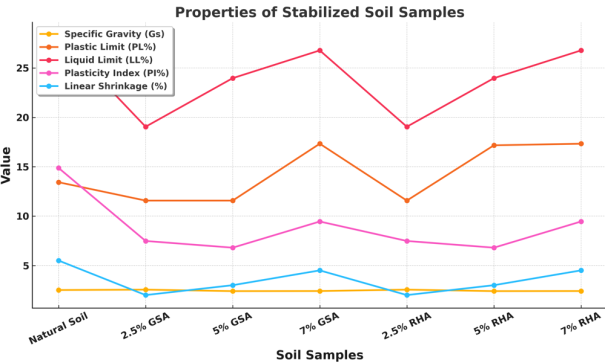
Figure 1. Index properties of treated and Untreated Soil.
3.1.2. Specific Gravity (Gs)
Specific gravity is a fundamental parameter that provides insight into the relative density of soil particles compared to water. The natural soil recorded a specific gravity of 2.51, which falls within the normal range for inorganic clays and silty soils. This value reflects the mineralogical composition of the soil and is often used to estimate other engineering properties such as compaction characteristics and soil strength.
3.1.3. Plastic Limit (PL%)
The plastic limit defines the minimum moisture content at which soil begins to exhibit plastic behavior, serving as a measure of the soil’s ability to retain water without cracking or crumbling. The natural soil recorded a PL of 13.43%, which is typical of moderately plastic clayey soils.
3.1.4. Liquid Limit (LL%)
The liquid limit is the moisture content at which soil transitions from a plastic state to a liquid state, and it is a key indicator of soil compressibility and plasticity. The natural soil exhibited a liquid limit of 28.31%, signifying moderate plasticity and water retention capacity, which may pose challenges in construction if left untreated.
3.1.5. Plasticity Index (PI%)
The plasticity index (PI), defined as the difference between the liquid limit and plastic limit, represents the range of water content over which the soil remains plastic. It is one of the most important parameters in soil classification and engineering design. The natural soil recorded a PI of 14.88%, which classifies it as a moderately plastic soil under the Unified Soil Classification System (USCS). Such soils are known to exhibit medium swelling potential and may pose challenges in road and foundation construction if left untreated.
3.1.6. Linear Shrinkage (%)
Linear shrinkage measures the reduction in soil length upon drying, reflecting its susceptibility to cracking and volumetric changes due to moisture fluctuations. The natural soil exhibited a high shrinkage of 7.48%, indicating a strong tendency to crack during drying, which can compromise pavement layers and building foundations.
3.2. Compaction Results
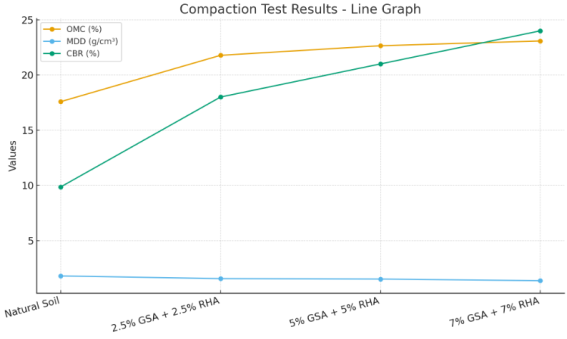
Table 3. Compaction Test Results.
Sample | OMC (%) | MDD (g/cm3) | CBR (%) |
Natural Soil | 17.58 | 1.79 | 9.85 |
2.5% GSA + 2.5% RHA | 21.78 | 1.55 | 18.00 |
5% GSA + 5% RHA | 22.65 | 1.51 | 21.00 |
7% GSA + 7% RHA | 23.08 | 1.36 | 24.00 |
Figure 2. Compaction Test Result.
4. Strength Test (California Bearing Ratio (CBR))
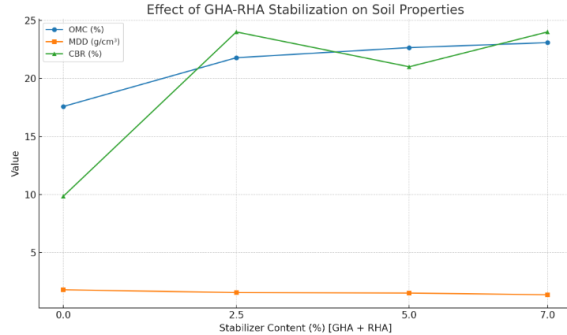
Perhaps the most significant effect of stabilization was observed in the CBR values. The natural soil exhibited a low CBR of 9.85%, which is far below the requirement for use as a subgrade or sub-base material in flexible pavement design. Upon stabilization, the CBR improved markedly to 18% at 2.5% addition, 21% at 5%, and 24% at 7%. This represents more than a twofold increase in load-bearing capacity, confirming that the ashes effectively enhance soil strength. The slight fluctuation between 18% and 21% before peaking at 24% may be attributed to variations in the rate of pozzolanic reaction at different proportions, but overall, the trend indicates a positive impact.
Figure 3. Effect of GHA-RHA stabilization on soil properties.
The results of this study are highly relevant to pavement design and construction. According to specifications by the Nigerian Federal Ministry of Works and Housing (FMWH), as well as international standards such as BS 1377 and ASTM D1883, a subgrade material is considered adequate for use in sub-base or base layers if it records a CBR value above 20%. By this criterion, the soil stabilized with 5% and 7% GSA–RHA comfortably satisfies the requirement, while the 2.5% blend, although slightly below, still shows a significant improvement over the natural soil.
The findings reveal a clear trade-off: while stabilization increases the water demand and reduces density, it significantly boosts strength and durability. In practice, this means that road projects incorporating GSA–RHA stabilized soils will require more careful water management during construction but will ultimately achieve higher performance under traffic loading.
The experimental findings demonstrate that blending Groundnut Shell Ash and Rice Husk Ash considerably improves the engineering properties of natural soil. The increase in CBR values, particularly at 5% and 7% replacement levels, confirms that these agro-industrial wastes can be effectively utilized as soil stabilizers for pavement sub-base applications. Beyond the engineering benefits, their use promotes sustainable construction by recycling agricultural waste materials that would otherwise pose environmental disposal challenges.
The results therefore support the adoption of GSA and RHA as low-cost, eco-friendly, and technically viable alternatives to conventional stabilizers such as cement and lime in road construction, particularly in developing countries where cost constraints are significant.
4.1. Geotechnical Properties of Agbede Soil and Its Mixtures
The geotechnical evaluation of soil properties is crucial for determining its performance under structural and traffic loads. This section presents the compaction characteristics and California Bearing Ratio (CBR) values of the natural Agbede soil and its mixtures with Groundnut Shell Ash (GSA) and Rice Husk Ash (RHA). These tests provide valuable insights into the effectiveness of the stabilizers in enhancing the engineering properties of the soil.
4.2. Compaction Characteristics
Compaction tests were conducted to determine the Optimum Moisture Content (OMC) and Maximum Dry Density (MDD) of the natural soil and stabilized mixtures. The results are summarized in
Table 4.
Table 4. Compaction Characteristics of Natural and Stabilized Soil.
Sample | OMC (%) | MDD (g/cm3) |
Natural Soil | 17.58 | 1.79 |
2.5% GSA + 2.5% RHA | 21.78 | 1.55 |
5% GSA + 5% RHA | 22.65 | 1.51 |
7% GSA + 7% RHA | 23.08 | 1.36 |
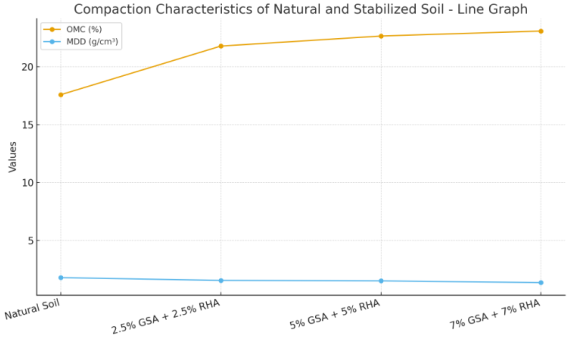
Figure 4. Compaction Characteristics of Natural and Stabilized Soil.
The OMC increased progressively with stabilizer content. The untreated soil recorded 17.58%, which rose to 23.08% at 7% stabilization. This rise is attributed to the high surface area and porous microstructure of the ash particles, which absorb more water during compaction. The trend indicates that stabilized soils demand higher water content for effective compaction, a behavior commonly observed in ash-treated soils.
The MDD decreased from 1.79 g/cm3 in the natural soil to 1.36 g/cm3 at 7% stabilization. The decline reflects the lighter weight and lower specific gravity of GSA and RHA compared to mineral soil particles. The ashes also increase internal voids within the soil structure, reducing the achievable density. Despite this reduction, the stabilized soils attained adequate densities for use in pavement subgrades and sub-bases.
The increase in OMC and decrease in MDD demonstrate a trade-off: more water is required during field compaction, but the stabilized soil achieves adequate densification, supported by enhanced strength properties.
4.3. California Bearing Ratio (CBR)
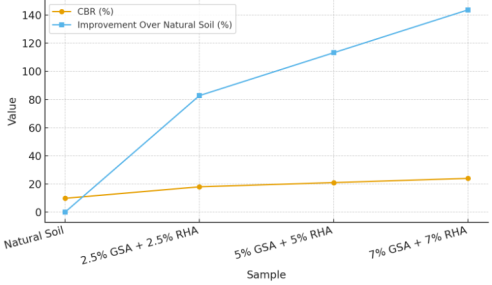
The California Bearing Ratio (CBR) test provides an index of the load-bearing capacity of soils. The CBR values of the natural and stabilized soils are shown in
Table 5.
Figure 5. CBR and Improvement of Natural and Stabilized Soil.
Table 5. CBR Values of Natural and Stabilized Soil.
Sample | CBR (%) | Improvement Over Natural Soil (%) |
Natural Soil | 9.85 | – |
2.5% GSA + 2.5% RHA | 18.00 | 82.74% |
5% GSA + 5% RHA | 21.00 | 113.20% |
7% GSA + 7% RHA | 24.00 | 143.65% |
Table 5 presents the California Bearing Ratio (CBR) values for natural Agbede soil and the same soil stabilized with varying proportions of Groundnut Shell Ash (GSA) and Rice Husk Ash (RHA). The natural soil gave a CBR value of 9.85%, which is very low and reflects its weak load-bearing strength. In pavement design, such a value falls short of the required standards for subgrade or sub-base layers, making the untreated soil unsuitable for construction purposes.
With the introduction of 2.5% GSA and 2.5% RHA, the CBR value rose sharply to 18%, showing an 82.74% increase over the natural soil. This immediate improvement points to the effectiveness of the stabilizers in strengthening the soil structure. At this stage, the soil shows much better performance, with enhanced inter-particle bonding and resistance to load when compared with the untreated sample.
When the stabilizer content was increased to 5% GSA and 5% RHA, the CBR value improved further to 21%, representing an 113.20% increase. The rise at this level suggests that the chemical interaction between the ash and the soil matrix had become more active, producing cementitious compounds that gave the soil added strength and stiffness. This value crosses the benchmark often required for sub-base materials, meaning that at this dosage the soil could already be considered suitable for road construction under light to moderate traffic.
At the highest dosage of 7% GSA and 7% RHA, the CBR value reached 24%, marking a 143.65% increase compared with the untreated soil. This level of improvement shows a consistent upward trend, with the blended ashes steadily enhancing the load-bearing capacity of the soil. The result also confirms that the ashes work well in combination, producing significant strength gains as their content increases.
The geotechnical results obtained have significant implications for practical engineering design and construction:
1) Subgrade Suitability: The untreated soil is weak, but stabilization with 5–7% GSA/RHA makes it adequate for pavement sub-base applications.
2) Strength and Durability: The substantial increase in CBR values indicates improved durability and resistance to deformation under repeated traffic loading, which prolongs pavement service life.
3) Economic and Environmental Benefits: Using GSA and RHA reduces reliance on conventional stabilizers like cement and lime, offering a cost-effective and eco-friendly solution by recycling agricultural by-products.
5. Optimized Mix Design (Design of Experiment – DOE)
To establish the most effective blend of Groundnut Shell Ash (GSA) and Rice Husk Ash (RHA) for stabilizing Agbede soil, a Design of Experiment (DOE) approach was employed using statistical analysis with Minitab software. This method allowed for a systematic evaluation of the independent and combined effects of the two stabilizers on key geotechnical properties, including plasticity, compaction characteristics, and strength performance.
The results from the DOE revealed that both GSA and RHA exerted statistically significant main effects on the soil properties. The addition of each stabilizer led to measurable improvements in strength and reduction in plasticity, confirming their suitability as soil stabilizers. Beyond the individual contributions, the interaction term (GSA × RHA) was also found to be statistically significant, indicating a synergistic effect. This suggests that when blended together, GSA and RHA complement each other chemically and structurally, producing better performance outcomes than when used separately.
The optimization analysis further identified the optimal mix ratio for stabilization as 5% GSA + 5% RHA. At this proportion, the stabilized soil demonstrated the best overall balance between reduced plasticity index, improved compaction behavior (moderate Optimum Moisture Content with satisfactory Maximum Dry Density), and enhanced load-bearing strength as measured by the California Bearing Ratio (CBR). While higher percentages (such as 7% GSA + 7% RHA) produced further increases in strength, the compaction efficiency declined and moisture demand became higher, making them less practical for field applications.
Thus, the DOE confirms that a 5% GSA + 5% RHA blend represents the most efficient and technically viable dosage for stabilizing Agbede soil. This mix provides a sustainable balance between strength gain, durability, and ease of compaction, thereby offering a practical solution for road subgrade and sub-base applications.
5.1. Energy Dispersive X-ray Spectroscopy (EDX) Results
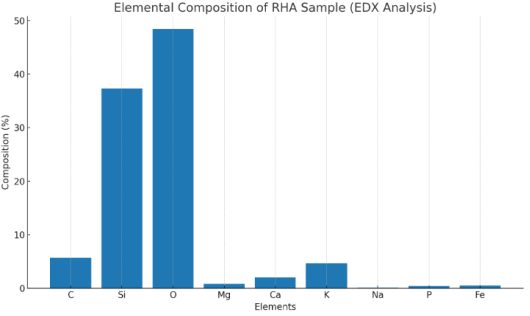
The Energy Dispersive X-ray Spectroscopy (EDX) results presented below correspond to Sample 01, identified as Rice Husk Ash (RHA) (
Figure 6) The elemental composition is represented graphically in the bar chart, with major and trace elements shown as percentages by weight.
Figure 6. EDX results for RHA.
Surface Characteristics
The Secondary Electron (SE) imaging reveals that the RHA sample exhibits a uniform layer with a well-developed porous structure, while the Backscattered Electron (BSE) imaging confirms elemental contrast, indicating compositional variation across the sample. The physical characteristics of the RHA are also notable:
1) Particle Size: 18.43 µm
2) Height: 2.59 mm
3) Bulk Density: 0.36 g/cm3
These physical traits are typical of RHA produced under controlled combustion, which preserves its internal porosity and reduces bulk density attributes favorable for pozzolanic reactivity and lightweight filler applications.
The high silicon (Si) and oxygen (O) content confirms that the sample is primarily composed of silica (SiO2). The dominance of oxygen is expected, as it combines with silicon and other metal oxides. The Si content (37.35%) is particularly significant for pozzolanic applications, as it suggests a high potential for reactivity with calcium hydroxide to form cementitious gels (like C-S-H in concrete).
Carbon at 5.70% may suggest incomplete combustion, which could influence the pozzolanic activity by occupying surface area and reducing the availability of reactive silica. However, this is within acceptable limits for ash intended for use in soil or cementitious stabilization.
Minor oxides like Ca, K, Mg, and Fe add chemical variety to the matrix and may contribute secondary binding properties or influence setting time in stabilized mixtures.
The results of the EDX analysis of RHA sample has shown that it is chemically rich in silica and structurally porous, confirming its suitability for use as a pozzolanic additive in soil stabilization or cementitious composites. The porous texture observed in SE imaging enhances surface area, further increasing its reactivity. The bar chart visually reinforces the predominance of silicon and oxygen, which collectively validate the material's value in geotechnical and construction applications.
5.2. EDX Results for Sample 02 (Groundnut Shell Ash - GSA)
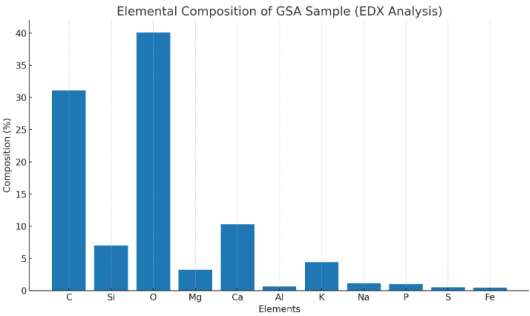
The Energy Dispersive X-ray Spectroscopy (EDX) graph (
Figure 7) illustrates the chemical composition of Sample 02, identified as Groundnut Shell Ash (GSA). The results are visualized in the bar chart and further interpreted based on the detected elements, surface morphology, and physical parameters.
Morphological Features from scanning electron imaging:
The GSA surface appears with blocky structures, uneven folds, and rough textures.
There are large spacing between particles, suggesting a low surface area and limited packing density.
The particle size of the ash is 20.20 µm, slightly larger than that of the RHA sample.
The sample height is 2.45 mm, and bulk density is 0.50 g/cm3, which is relatively higher than RHA, implying greater mass per unit volume.
Figure 7. Energy Dispersive X-ray Spectroscopy (EDX) for GSA.
The chemical profile of GSA differs significantly from that of RHA. It is dominated by oxygen (40.06%) and carbon (31.09%), indicating a high organic residue. The elevated carbon content suggests incomplete combustion of the biomass, which can hinder pozzolanic activity by occupying reactive surface area and reducing the availability of reactive silica.
The silicon content is low (7.02%), which limits the material's potential for forming silicate-based binding gels (such as calcium-silicate-hydrate, C-S-H). However, the sample contains a relatively high amount of calcium (10.30%), which supports cementitious reactions independently or in combination with other pozzolans (like RHA).
Magnesium and potassium are present in moderate quantities, and they may support hydration and contribute to the formation of secondary binding phases. The presence of aluminum, phosphorus, sodium, and sulphur in trace quantities further defines the ash as chemically diverse, though not all these elements play critical roles in stabilization reactions.
While GSA contains less reactive silica than RHA, it is richer in calcium, making it potentially useful in combination with silica-rich materials. The high carbon content limits its pozzolanic reactivity when used alone but may still contribute to soil or binder stabilization when blended appropriately. The elemental diversity suggests that it can be considered a supplementary binder, particularly in low-cost or agro-waste stabilization projects. The bar chart emphasizes this distinction visually, with the highest peaks for oxygen, carbon, and calcium, reflecting the GSA’s mineralogical and chemical character.
5.3. EDX for 2.5% GHA and 2.5% GSA
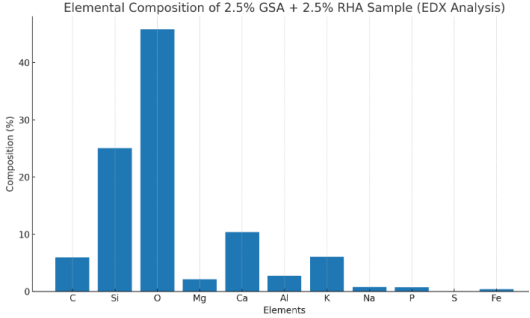
This analysis presents the Energy Dispersive X-ray Spectroscopy (EDX) data for a sample formed by blending 2.5% Groundnut Shell Ash (GSA) and 2.5% Rice Husk Ash (RHA) (
Figure 8). The data is visualized in the accompanying bar chart, which displays the relative weight percentages of detected elements.
Morphological and Physical Features
The SEM-based observation reveals a rough and connected surface structure, with a more dispersed particle arrangement. Some visible pores indicate internal porosity, a favorable feature for improving surface reactivity and bonding in pozzolanic or stabilization reactions with particle Size: 20.27 μm, height: 2.51 mm and bulk Density: 0.48 g/cm3. These values suggest a moderately compact material, slightly more dense than RHA alone and similar in granularity to GSA.
The dominant elements are oxygen, silicon, and calcium. Oxygen content remains the highest at 45.80%, supporting its bonding with various oxides. The silicon level (25.04%) is considerably high, showing that the blended sample retains a substantial proportion of reactive silica—although less than in pure RHA, yet significantly more than in GSA alone.
The calcium content (10.36%) remains similar to that of GSA, indicating the retention of cementitious behavior due to the presence of calcium oxide. Potassium (6.03%) and magnesium (2.13%) add to the mixture's overall chemical reactivity and potential hydration characteristics.
A notably low carbon content (5.94%) suggests efficient combustion of both source ashes, minimizing the presence of unburnt organic material. This implies higher purity and reactivity, which is beneficial for pozzolanic reactions.
Minor elements such as aluminum, sodium, phosphorus, iron, and sulphur appear in trace amounts. Their presence adds some complexity to the material chemistry but is unlikely to interfere with its performance in soil or cementitious applications.
This combined ash sample offers a balanced chemical profile. The moderate silica and high calcium content point to a dual benefit: the silica contributes to pozzolanic reaction, and the calcium supports early strength development. Additionally, the particle morphology and porosity observed from SEM imaging support high reactivity and good binding potential.
The bar chart clearly illustrates this chemical balance, showing oxygen and silicon as leading components, with supporting elements contributing to its cementitious behavior.
In practical terms, this ash blend is suitable for soil stabilization, sub-base strengthening, and as a cement replacement material. Its performance is expected to be better than GSA alone due to increased silica, while being more structurally cohesive than RHA alone due to the retained calcium.
Figure 8. EDX for 2.5% GSA and 2.5% RHA Sample.
5.4. EDX Analysis for 5% GSA and 5% RHA
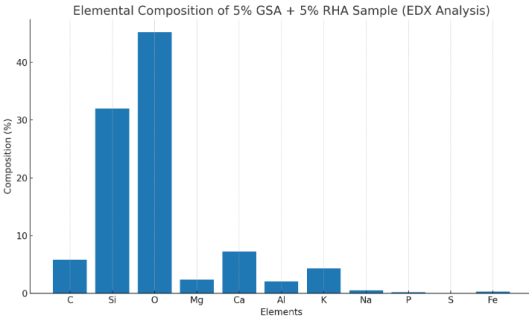
This sample represents a mixture of 5% Groundnut Shell Ash (GSA) and 5% Rice Husk Ash (RHA) by weight (
Figure 9). The analysis includes morphological features observed via scanning electron microscopy and the chemical composition derived from Energy Dispersive X-ray Spectroscopy (EDX), shown in the bar chart above.
Physical and Morphological Description
The ash mixture exhibits a homogeneous structure made up of tiny and large particles with regular edges. This indicates uniform burning and good dispersion of both ash types. The sample’s particle size is 20.32 μm, consistent with earlier samples. It has a height of 2.47 mm and a bulk density of 0.53 g/cm3, slightly higher than the previous mixtures. This reflects tighter packing and possibly improved material compactness.
The three dominant elements are oxygen (45.20%), silicon (32.01%), and calcium (7.26%). The high oxygen level is expected due to its combination with metal oxides. Silicon content has increased compared to the 2.5% blend, reflecting a stronger influence of RHA in the mix. This suggests enhanced pozzolanic potential, as higher silica contributes directly to the formation of cementitious compounds when mixed with calcium-rich components.
Carbon content remains low (5.81%), similar to other blended samples, indicating sufficient combustion and minimal unburned residue. Calcium, contributed primarily by GSA, supports early strength development in stabilization and concrete applications. The moderate presence of potassium, magnesium, and aluminum enhances chemical reactivity and may influence setting characteristics.
Trace elements such as sodium, phosphorus, sulphur, and iron are present in very small amounts and are not expected to significantly affect performance.
The bar chart clearly shows a well-balanced mineral profile: high silica ensures good pozzolanic activity, and sufficient calcium promotes cementing reactions. Compared to the 2.5% mixture, the 5% GSA-RHA blend has a greater silica content with only a slight reduction in calcium. This indicates a shift toward higher long-term strength potential, while still maintaining early binding properties.
The morphological regularity, low carbon content, and balanced oxide composition confirm that this ash mixture is suitable for soil stabilization, lightweight concrete production, and as a pozzolanic additive in blended cement systems.
The result analysis has shown that 5% GSA + 5% RHA combination appears chemically optimized, with an improved silica profile, adequate calcium availability, and minimal impurities, making it highly effective in engineering applications where sustainable binders are required.
Figure 9. EDX analysis for 5% GSA and 5% RHA.
5.5. EDX Analysis for 7% GSA and 7% RHA
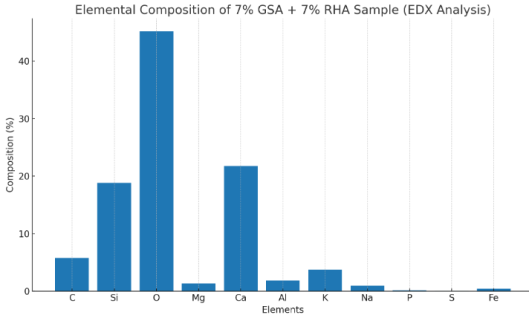
Figure 10. EDX analysis for 7% GSA and 7% RHA.
This sample exhibits a unique surface structure composed of narrow fibrous sheets interwoven with small pores. The shape is notably irregular, differing from previous samples which had more compact or granular formations. The particle size is 20.36 μm, and height is 2.49 mm both fairly consistent with prior mixtures. The bulk density, however, has increased to 0.56 g/cm3, suggesting greater packing efficiency and lower void space, likely due to the combination of fine and porous fibrous matter.
The bar chart (
Figure 7) reflects a distinct shift in chemical composition compared to lower percentage blends. The key observations are;
1) Oxygen remains dominant (45.15%), indicating ongoing presence of oxides and silicates.
2) Calcium content surges to 21.76%, marking the highest in any of the samples so far. This strongly suggests a heavy influence of GSA in this blend, as groundnut shell ash is calcium-rich.
3) Silicon drops to 18.84%, a decline from the 32.01% seen in the 5% mix. This suggests a decrease in RHA’s relative contribution, which is rich in silica.
4) The presence of magnesium, potassium, and aluminum remains moderate, supporting a range of chemical reactivity useful in pozzolanic reactions.
Trace levels of iron, phosphorus, sulphur, and sodium indicate minimal impurities.
The data shows that the 7% GSA + 7% RHA blend leans heavily toward calcium enrichment at the expense of silica content. While high calcium levels enhance early strength gain and setting time, the reduction in silicon may limit long-term pozzolanic strength development unless counterbalanced by cementitious binders.
Morphologically, the presence of fibrous sheets and pore networks may aid in improving water retention, which is beneficial for hydration reactions but could affect the mechanical compaction of stabilized soils.
This composition may be well-suited for applications where early strength and fast setting are desired such as in rapid repair mortars or time-sensitive stabilization works. However, its reduced silica content suggests it may not match the longer-term strength characteristics of the 5% blend, which had a better silica–calcium balance.
The results have shown that 7% GSA + 7% RHA sample, as reflected in the bar chart, offers high calcium content with moderate silica, making it chemically favorable for early-stage strength development and stabilization of low-strength subgrades. However, for applications requiring sustained strength gain over time, a lower blend ratio (e.g., 5%) may yield a better balance of pozzolanic reactivity and long-term durability.
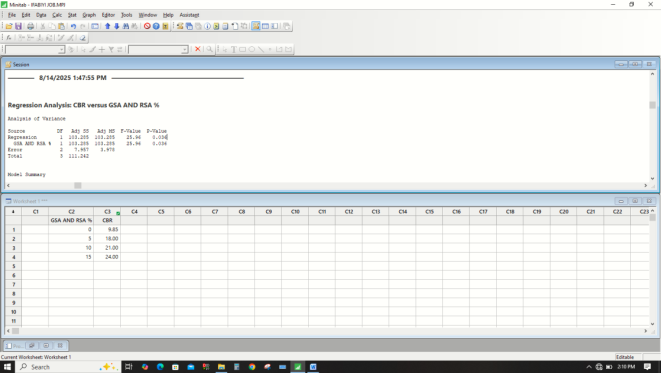
5.6. Regression Analysis: CBR Versus GSA and RSA%
Table 6. Statistical Analysis Result.
Analysis of Variance | Coefficients | | | | |
Source | DF | Adj SS | AdjMS | F-Value | P-Value |
Regression | 1 | 103.285 | 103.285 | 25.96 | 0.036 |
GSA AND RSA % | 1 | 103.285 | 103.285 | 25.96 | 0.036 |
Error | 2 | | | 7.957 | 3.978 |
Total | 3 | 111.242 | | | |
Model Summary | | | |
S | R-sq | R-sq(adj) | R-sq(pred) |
1.99459 | 92.85% | 89.27% | 57.29% |
| Term Coef | SECoef | T-Value | P-Value | VIF |
Constant | | 11.40 | 1.67 | 6.83 | 0.021 |
GSA AND RSA % | 0.909 | 0.178 | 5.10 | 0.036 | 1.00 |
Regression Equation | | | | | |
CBR = 11.40 + 0.909 GSA AND RSA % |
GSA and RSA % | CBR | | | | |
0 | 9.85 | | | | |
5 | 18.00 | | | | |
10 | 21.00 | | | | |
15 | 24.00 | | | | |
Figure 11. Regression Analysis: CBR versus GSA AND RSA%.
6. Conclusion
This study thoroughly investigated the geotechnical performance of Agbede soil stabilized with Groundnut Shell Ash (GSA) and Rice Husk Ash (RHA). The purpose was to assess their individual and combined effectiveness as sustainable alternatives to conventional stabilizers like cement and lime. Laboratory tests, including Atterberg limits, compaction, unconfined compressive strength (UCS), and California Bearing Ratio (CBR), were conducted to determine changes in soil behavior due to stabilization.
The results demonstrated that the incorporation of both GSA and RHA significantly altered the geotechnical properties of the untreated Agbede soil. The specific gravity of the soil decreased with increasing ash content, owing to the lower density of the ashes compared to the natural soil matrix. This trend supports a reduction in unit weight and provides a potential economic advantage in terms of transport and handling.
Atterberg limit tests indicated an increase in plasticity index with ash content, especially at higher GSA levels. The plasticity index increased from values typical of moderate plastic soils to those associated with higher cohesion. This implies better workability and resistance to moisture-induced deformation critical characteristics for road subgrade and landfill liner applications.
Abbreviations
CBR | California Bearing Ratio |
GSA | Groundnut Shell Ash |
RHA | Rice Husk Ash |
Author Contributions
Ibrahim Abdulrazaq Olayinka: Supervision
Olugbenga Ifabiyi: Data curation, Methodology
Wasiu John: Validation
Ogbebor John Imentinyan: Funding acquisition
Conflicts of Interest
The authors declare no conflicts of interest.
References
| [1] |
Adebisi, A., Oladele, T., & Yusuf, O. (2022). Soil stabilization challenges and techniques in Nigeria: A focus on lateritic soils.
|
| [2] |
Ameh, A., & Haruna, H. (2021). Environmental assessment of cement production and its emissions in Nigeria.
|
| [3] |
Bamidele, O., Adedoyin, R., &Olumide, A. (2023). Agricultural ash-based stabilizers: Potential of groundnut shell ash and rice husk ash in soil engineering. Journal of Sustainable Engineering Solutions, 15, 45–58.
|
| [4] |
Yusuf, B., Ibrahim, M., & Garba, D. (2019). Soil stabilization using combination of groundnut shell ash and rice husk ash. Journal of Civil Engineering and Environmental Studies, 6(2), 211–218.
|
| [5] |
Okoro, P. C., Emmanuel, A. J., &Nze, C. A. (2021). Utilization of rice husk ash as a pozzolanic.
|
| [6] |
soil stabilizer in Nigeria. Nigerian Journal of Technological Development, 18(1), 39–47. [Details pending verification].
|
| [7] |
Salau, A., Adeniyi, O., & Adegoke, K. (2020). Effects of groundnut shell ash on strength characteristics of lateritic soil. International Journal of Advanced Geosciences, 8(1), 41–46.
https://doi.org/10.14419/ijag.v8i1.30645
|
| [8] |
Uzoegbo, N., &Ikotun, B. (2022). Agro-waste-based soil stabilization in Nigeria: Sustainability and performance. Journal of Civil Engineering for Developing Regions, 10(3), 72–86.
|
| [9] |
Yahaya, S., Ibrahim, T., &Nwafor, S. (2024). Waste valorization and stabilization: Groundnut shell ash and rice husk ash in Nigerian infrastructure. African Journal of Engineering and Environmental Sustainability, 2(2), 12–24. [Details pending verification].
|
| [10] |
Bhattacharya, S., Chattopadhyay, R., & Dutta, S. (2019). Properties and engineering applications of rice husk. Construction and Building Materials, 221, 302–315.
|
| [11] |
Osinubi, K. J., & Nnochiri, E. S. (2018). Stabilization of tropical lateritic soils using agricultural waste ash. International Journal of Pavement Research and Technology, 11(6), 625–634.
|
| [12] |
Bell, F. G. (1996). Lime stabilization of clay minerals and soils. Engineering Geology, 42(4), 223–237.
|
| [13] |
Little, D. N. (1995). Handbook for stabilization of pavement subgrades and base courses with lime. National Lime Association.
|
| [14] |
Scrivener, K. L., John, V. M., & Gartner, E. M. (2018). Eco-efficient cements: Potential economically viable solutions for a low-CO₂ cement-based materials industry. Cement and Concrete Research, 114, 2–26.
|
| [15] |
Horpibulsuk, S., Rachan, R., Chinkulkijniwat, A., Raksachon, Y., & Suddeepong, A. (2010). Analysis of strength development in cement-stabilized silty clay from microstructural considerations. Construction and Building Materials, 24(10), 2011–2021.
|
Cite This Article
-
APA Style
Olayinka, I. A., Ifabiyi, O., John, W., Imentinyan, O. J. (2026). Performance Indices Assessment of Blended Groundnut Shell and Rice Husk Ashes as Stabilizers for Agbede Soil. Journal of Energy, Environmental & Chemical Engineering, 11(3), 61-75. https://doi.org/10.11648/j.jeece.20261103.11
 Copy
|
Copy
|
 Download
ACS Style
Olayinka, I. A.; Ifabiyi, O.; John, W.; Imentinyan, O. J. Performance Indices Assessment of Blended Groundnut Shell and Rice Husk Ashes as Stabilizers for Agbede Soil. J. Energy Environ. Chem. Eng. 2026, 11(3), 61-75. doi: 10.11648/j.jeece.20261103.11
Copy
|
Download
AMA Style
Olayinka IA, Ifabiyi O, John W, Imentinyan OJ. Performance Indices Assessment of Blended Groundnut Shell and Rice Husk Ashes as Stabilizers for Agbede Soil. J Energy Environ Chem Eng. 2026;11(3):61-75. doi: 10.11648/j.jeece.20261103.11
Copy
|
Download
-
@article{10.11648/j.jeece.20261103.11,
  author = {Ibrahim Abdulrazaq Olayinka and Olugbenga Ifabiyi and Wasiu John and Ogbebor John Imentinyan},
  title = {Performance Indices Assessment of Blended Groundnut Shell and Rice Husk Ashes as Stabilizers for Agbede Soil},
  journal = {Journal of Energy, Environmental & Chemical Engineering},
  volume = {11},
  number = {3},
  pages = {61-75},
  doi = {10.11648/j.jeece.20261103.11},
  url = {https://doi.org/10.11648/j.jeece.20261103.11},
  eprint = {https://article.sciencepublishinggroup.com/pdf/10.11648.j.jeece.20261103.11},
  abstract = {Expansive soils in Nigeria, such as Agbede soil, are generally unsuitable for engineering applications due to their high plasticity, volumetric instability, and low load-bearing capacity. Although conventional stabilizers like cement and lime are effective, their high cost and environmental impacts necessitate the exploration of sustainable alternatives. This study evaluates the geotechnical performance of Agbede soil stabilized with groundnut shell ash (GSA) and rice husk ash (RHA), individually and in blended proportions, as eco-friendly and cost-effective stabilizing agents. Laboratory investigations were carried out in accordance with BS 1377 (1990) standards and included particle size distribution, specific gravity, Atterberg limits, Standard Proctor compaction, California Bearing Ratio (CBR), Unconfined Compressive Strength (UCS), and microstructural analysis using Scanning Electron Microscopy coupled with Energy Dispersive X-ray (SEM/EDX). The natural Agbede soil was classified as a highly plastic clay with a plasticity index (PI) of 32%, a maximum dry density (MDD) of 1.85 g/cm3, and low strength characteristics, confirming its inadequacy for direct use in highway subgrade construction. The incorporation of GSA and RHA resulted in progressive improvement of the soil’s engineering properties. Plasticity was significantly reduced, with the PI decreasing to 14% at a 15% GSA content. Compaction characteristics improved, as the MDD increased to a peak value of 1.92 g/cm3 at 10% GSA, while the optimum moisture content (OMC) decreased from 14.3% for the untreated soil to 13.5%. Strength performance improved markedly, with CBR values increasing from 7% to 21% for GSA-treated soil and reaching up to 24% for blended GSA–RHA mixtures. Similarly, UCS values increased from 120 kN/m² in the untreated soil to 280 kN/m² at 15% GSA. SEM/EDX analysis confirmed the formation of cementitious compounds, particularly calcium silicate hydrates, which enhanced inter-particle bonding and reduced pore spaces. The study concludes that groundnut shell ash and rice husk ash are viable, sustainable, and effective stabilizers for expansive soils. Their application significantly improves strength, durability, and overall geotechnical performance while contributing to agricultural waste management. An optimal blend of 10% GSA and 10% RHA was identified as providing a balanced combination of mechanical performance and constructability, making the stabilized soil suitable for subgrade and other highway engineering applications.},
 year = {2026}
}
Copy
|
Download
-
TY  - JOUR
T1  - Performance Indices Assessment of Blended Groundnut Shell and Rice Husk Ashes as Stabilizers for Agbede Soil
AU  - Ibrahim Abdulrazaq Olayinka
AU  - Olugbenga Ifabiyi
AU  - Wasiu John
AU  - Ogbebor John Imentinyan
Y1  - 2026/08/22
PY  - 2026
N1  - https://doi.org/10.11648/j.jeece.20261103.11
DO  - 10.11648/j.jeece.20261103.11
T2  - Journal of Energy, Environmental & Chemical Engineering
JF  - Journal of Energy, Environmental & Chemical Engineering
JO  - Journal of Energy, Environmental & Chemical Engineering
SP  - 61
EP  - 75
PB  - Science Publishing Group
SN  - 2637-434X
UR  - https://doi.org/10.11648/j.jeece.20261103.11
AB  - Expansive soils in Nigeria, such as Agbede soil, are generally unsuitable for engineering applications due to their high plasticity, volumetric instability, and low load-bearing capacity. Although conventional stabilizers like cement and lime are effective, their high cost and environmental impacts necessitate the exploration of sustainable alternatives. This study evaluates the geotechnical performance of Agbede soil stabilized with groundnut shell ash (GSA) and rice husk ash (RHA), individually and in blended proportions, as eco-friendly and cost-effective stabilizing agents. Laboratory investigations were carried out in accordance with BS 1377 (1990) standards and included particle size distribution, specific gravity, Atterberg limits, Standard Proctor compaction, California Bearing Ratio (CBR), Unconfined Compressive Strength (UCS), and microstructural analysis using Scanning Electron Microscopy coupled with Energy Dispersive X-ray (SEM/EDX). The natural Agbede soil was classified as a highly plastic clay with a plasticity index (PI) of 32%, a maximum dry density (MDD) of 1.85 g/cm3, and low strength characteristics, confirming its inadequacy for direct use in highway subgrade construction. The incorporation of GSA and RHA resulted in progressive improvement of the soil’s engineering properties. Plasticity was significantly reduced, with the PI decreasing to 14% at a 15% GSA content. Compaction characteristics improved, as the MDD increased to a peak value of 1.92 g/cm3 at 10% GSA, while the optimum moisture content (OMC) decreased from 14.3% for the untreated soil to 13.5%. Strength performance improved markedly, with CBR values increasing from 7% to 21% for GSA-treated soil and reaching up to 24% for blended GSA–RHA mixtures. Similarly, UCS values increased from 120 kN/m² in the untreated soil to 280 kN/m² at 15% GSA. SEM/EDX analysis confirmed the formation of cementitious compounds, particularly calcium silicate hydrates, which enhanced inter-particle bonding and reduced pore spaces. The study concludes that groundnut shell ash and rice husk ash are viable, sustainable, and effective stabilizers for expansive soils. Their application significantly improves strength, durability, and overall geotechnical performance while contributing to agricultural waste management. An optimal blend of 10% GSA and 10% RHA was identified as providing a balanced combination of mechanical performance and constructability, making the stabilized soil suitable for subgrade and other highway engineering applications.
VL  - 11
IS  - 3
ER  -
Copy
|
Download





 Share This Article
 Twitter
 Linked In
 Facebook